
dometic three way fridge manual
Dometic Three-Way Fridge Manual: Comprehensive Guide
This manual provides essential guidance for operating and maintaining your Dometic three-way refrigerator, covering gas, 12V DC, and 230V AC power sources.
Installation instructions and troubleshooting steps are included for optimal performance and longevity.
Understanding Three-Way Fridge Technology

Dometic three-way refrigerators represent a versatile cooling solution, particularly popular in recreational vehicles and boats, due to their ability to operate on multiple power sources. Unlike standard household refrigerators relying solely on electricity, these units can function using absorption cooling powered by liquefied petroleum (LP) gas, 12V direct current (DC) – typically from a vehicle’s battery – and 230V alternating current (AC) – from a mains electrical hookup.
The core of this technology lies in the absorption cycle, utilizing ammonia, hydrogen, and water. Heat, generated by the chosen power source, drives the process, circulating these fluids to create a cooling effect. This differs significantly from compressor-based refrigerators, which use electricity to power a compressor. Three-way fridges are favored for off-grid capabilities, offering independence from traditional power infrastructure. However, understanding the nuances of each power source and proper ventilation is crucial for efficient and safe operation.
Proper operation requires understanding the limitations and benefits of each power source, ensuring optimal cooling performance and extending the fridge’s lifespan.

Dometic Fridge Models & Identification
Dometic offers a diverse range of three-way refrigerators, each designed to suit varying needs and installation spaces. Identifying your specific model is the first step towards accessing the correct documentation and support. Models are categorized by size, capacity, and features, including interior layouts and control panel designs. Common series include the RM, RMD, and CombiCool ranges, each with distinct characteristics.
Locating the model number is typically found on a sticker or plate affixed to the refrigerator’s exterior, often inside the door frame or on the rear panel. This sticker will also display the serial number and manufacturing date, vital information when contacting Dometic customer support or ordering replacement parts.
Dometic’s website provides a comprehensive database allowing you to search for your model using the serial number, granting access to specific manuals, parts diagrams, and troubleshooting guides. Accurate model identification ensures you’re utilizing the correct procedures for operation, maintenance, and repair, maximizing the fridge’s performance and longevity.
Power Sources: Gas, 12V DC, and 230V AC
Dometic three-way refrigerators are renowned for their versatility, operating efficiently on three distinct power sources: Liquefied Petroleum Gas (LPG), 12V Direct Current (DC), and 230V Alternating Current (AC). This multi-fuel capability makes them ideal for motorhomes, caravans, and off-grid applications.
Gas operation is typically used when stationary, providing a consistent cooling performance. 12V DC power is convenient during travel, drawing energy from the vehicle’s battery system. However, it’s crucial to monitor battery drain, as 12V operation can be less energy-efficient. Finally, 230V AC allows operation when connected to mains electricity at campsites or home, offering the most efficient cooling.
The refrigerator automatically prioritizes the power source in the following order: AC, then Gas, then 12V DC. A selector switch allows you to choose the desired power source, ensuring optimal operation based on your current situation. Understanding each power source’s characteristics is key to maximizing efficiency and extending the fridge’s lifespan.
Operating on Gas: Safety Precautions
Prioritizing safety is paramount when operating your Dometic fridge on gas. Ensure adequate ventilation by opening windows or vents to prevent carbon monoxide buildup – a potentially fatal hazard. Regularly inspect the gas hose and connections for leaks using a soapy water solution; never use a flame. A gas leak can cause fire or explosion.
Always operate the fridge on a level surface to ensure proper burner function and prevent gas from pooling. Never obstruct the ventilation openings around the fridge, as this can impede combustion and lead to dangerous gas accumulation. Before lighting the burner, confirm there are no flammable materials nearby.
Install a carbon monoxide detector within the vehicle or caravan and test it regularly. Familiarize yourself with the smell of LPG and know how to shut off the gas supply in an emergency. Adhering to these precautions will ensure safe and reliable operation of your fridge on gas.

Lighting the Gas Burner: Step-by-Step Instructions
To ignite the gas burner, begin by ensuring the fridge is level and the gas supply is open at the cylinder. Locate the burner access panel, typically at the fridge’s base rear. Open the panel and locate the burner assembly. Turn the thermostat knob to the ‘MAX’ setting to allow gas flow.
Next, locate the igniter button or slot. If using a button, press and hold it while simultaneously turning the burner control knob to the ‘Pilot’ position; If using a slot, insert a lit match or long lighter. Continue holding the igniter or match until the burner ignites with a steady blue flame.
Once lit, continue holding the burner control knob for approximately 30 seconds to allow the thermocouple to heat up. Release the knob; the burner should remain lit. If it doesn’t, repeat the process. Finally, adjust the thermostat to your desired cooling level. Always close the access panel securely;
Troubleshooting Gas Operation: Weak Flame or No Flame
A weak or absent flame indicates a potential issue with the gas supply, igniter, or burner assembly. First, verify the gas cylinder is full and the valve is fully open. Check the gas line for kinks or obstructions. If the flame is weak, ensure the burner isn’t clogged with dust or debris; carefully clean it with a soft brush.
If the burner fails to ignite, inspect the igniter. A faulty igniter won’t produce a spark. Test the thermocouple; a failing thermocouple won’t keep the gas valve open. A dirty or damaged burner jet can also prevent ignition. Ensure the burner control knob is fully engaged after lighting.

If problems persist, consult a qualified gas appliance technician. Never attempt repairs you are not comfortable with. A gas leak is a serious hazard; if you smell gas, immediately shut off the supply and ventilate the area. Regular maintenance prevents these issues.
Operating on 12V DC: Vehicle Integration
Integrating your Dometic three-way fridge into your vehicle’s 12V DC system requires careful wiring and fuse protection. Connect the fridge’s positive (+) and negative (-) wires to the vehicle’s corresponding terminals, ensuring correct polarity. Always use appropriately sized wiring to handle the fridge’s current draw and prevent overheating.
Install a fuse as close as possible to the power source; the fuse rating should match the fridge’s specifications (refer to the fridge’s data plate). Consider using a dedicated circuit for the fridge to avoid overloading other vehicle systems. Ensure the vehicle’s charging system (alternator or battery charger) can adequately supply the fridge’s power needs, especially during extended operation.
Regularly check the wiring connections for corrosion or looseness. A stable 12V DC supply is crucial for consistent cooling performance. Improper wiring can damage the fridge or vehicle’s electrical system. Consult a qualified automotive electrician if you are unsure about any aspect of the installation.

12V DC Operation: Power Consumption & Battery Drain
Dometic three-way fridges consume a significant amount of power when operating on 12V DC, impacting your vehicle’s battery life. Typical power consumption ranges from 85 to 120 watts, translating to approximately 7 to 10 amps. Continuous operation on 12V DC can quickly deplete a battery, especially if the battery is not fully charged or the fridge is operating at a high temperature setting.
To minimize battery drain, consider using the fridge on gas or 230V AC whenever possible. When relying on 12V DC, monitor the battery voltage regularly and recharge it as needed. A deep-cycle battery is recommended for fridge operation, as it’s designed for repeated discharge and recharge cycles.

Employing a battery monitor can provide valuable insights into power usage and remaining battery capacity. Optimizing fridge settings, such as temperature control, can also reduce power consumption. Remember that frequent door openings increase energy demand.
Operating on 230V AC: Mains Connection
Connecting your Dometic three-way fridge to a 230V AC mains power source is generally the most efficient operating method. Ensure the power supply voltage matches the fridge’s requirements, typically 220-240V AC, and that the electrical circuit is adequately rated to handle the fridge’s power consumption. A dedicated circuit is often recommended to prevent overloading.
Use a properly grounded outlet and a suitable power cord. Avoid using extension cords if possible, but if necessary, choose a heavy-duty cord of the correct gauge to prevent voltage drop and overheating. Before connecting, verify the polarity of the outlet to avoid damaging the fridge’s internal components.
When connected to mains power, the fridge will automatically switch to AC operation, prioritizing this power source over gas or 12V DC. Regularly inspect the power cord for any signs of damage. Disconnect the fridge from the mains supply during thunderstorms or prolonged periods of non-use to protect it from power surges.
Fridge Ventilation: Importance & Requirements
Proper ventilation is absolutely critical for the efficient and safe operation of your Dometic three-way fridge. These refrigerators rely on convection to dissipate heat generated by the cooling process, particularly when operating on gas. Insufficient ventilation can lead to reduced cooling performance, overheating, and even potential safety hazards like carbon monoxide buildup.
Dometic fridges require unobstructed airflow around the rear and top vents. Maintain a minimum clearance of at least 4 inches (10cm) behind the fridge and 2 inches (5cm) above. Avoid blocking these vents with items like curtains, clothing, or other obstructions. Ensure the area surrounding the fridge is well-ventilated, especially when using gas.
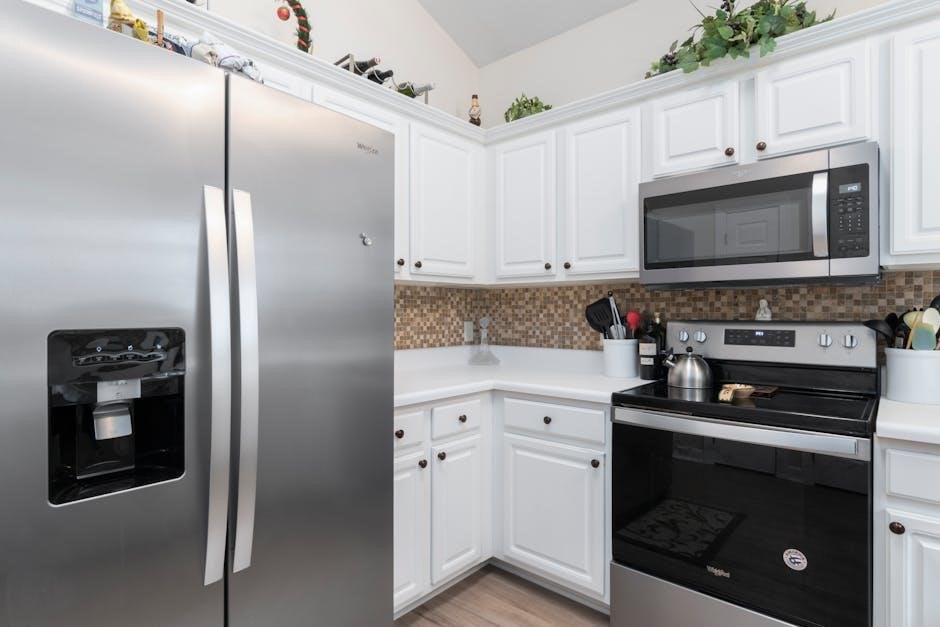
Regularly inspect the vents for dust and debris, cleaning them as needed to maintain optimal airflow. In enclosed spaces, consider installing additional ventilation, such as a small fan, to improve air circulation. Proper ventilation ensures efficient cooling and safe operation of your fridge.
Cleaning the Cooling Coils: Improving Efficiency
Over time, dust and debris can accumulate on the cooling coils of your Dometic three-way fridge, significantly reducing its cooling efficiency. Regularly cleaning these coils is a simple yet effective way to maintain optimal performance and reduce energy consumption. Dirty coils force the fridge to work harder, leading to increased power usage and potentially shortened lifespan.

To clean the coils, first, disconnect the fridge from all power sources – gas, 12V DC, and 230V AC. Locate the cooling coils, typically found on the back of the fridge. Use a vacuum cleaner with a brush attachment to gently remove loose dust and dirt. For stubborn grime, a soft brush and mild soapy water solution can be used, ensuring the coils are thoroughly rinsed and dried before reconnecting the power.
Cleaning the coils at least twice a year, or more frequently if used in dusty environments, will help ensure your Dometic fridge operates at peak efficiency, saving energy and maintaining consistent temperatures.
Thermostat Adjustment & Temperature Control
The thermostat in your Dometic three-way fridge controls the internal temperature, cycling the cooling system on and off to maintain your desired setting. Understanding how to adjust the thermostat is crucial for optimal food preservation and energy efficiency. The thermostat dial typically features numbered settings, with higher numbers indicating colder temperatures.
Begin by setting the thermostat to a mid-range setting (e;g., 3 or 4). Allow the fridge to run for at least 24 hours to stabilize. Then, check the internal temperature using a thermometer. If the fridge is too warm, increase the thermostat setting incrementally. If it’s too cold, decrease the setting. Avoid drastic adjustments, as this can strain the cooling system.
Remember that external factors like ambient temperature and the amount of food stored can influence the internal temperature. Regularly monitor the temperature and adjust the thermostat as needed to maintain a consistent and safe cooling environment for your food. Proper thermostat adjustment ensures efficient operation and prolongs the life of your fridge.
Defrosting Your Dometic Fridge
Over time, frost can accumulate inside your Dometic three-way fridge, reducing cooling efficiency and taking up valuable storage space. Regular defrosting is essential for maintaining optimal performance. The frequency of defrosting depends on usage and humidity levels, but generally, it’s recommended to defrost when the frost layer exceeds ¼ inch.
To defrost, first, disconnect the fridge from all power sources – gas, 12V DC, and 230V AC. Remove all food items and store them in a cooler. Leave the fridge door open to allow the frost to melt naturally. You can speed up the process by placing bowls of warm water inside, but avoid using sharp objects to scrape off the frost, as this can damage the cooling fins.
Once all the frost has melted, thoroughly dry the interior with a clean cloth. Replace the food items and reconnect the fridge to the power source. Proper defrosting ensures efficient cooling, prevents ice buildup, and extends the lifespan of your Dometic fridge.
Common Problems & Solutions: No Cooling
If your Dometic three-way fridge isn’t cooling, several issues could be the cause. First, verify the fridge is receiving power from the selected source – gas, 12V DC, or 230V AC. Check the gas supply, battery voltage, or mains connection respectively. A weak or absent flame on gas indicates a problem with the gas system, requiring professional attention.
Dirty cooling coils significantly reduce efficiency; clean them thoroughly as described in the manual. Ensure adequate ventilation around the fridge – blocked vents hinder heat dissipation. A faulty thermostat can also prevent cooling; test its functionality or consider replacement. If the fridge still isn’t cooling on gas, dirty coils or other performance factors may be present.
For 12V DC operation, check the vehicle’s wiring and fuses. If problems persist, consult a qualified technician. Remember safety first – never attempt repairs you’re uncomfortable with.
Winterizing Your Dometic Three-Way Fridge
Preparing your Dometic three-way fridge for winter storage is crucial to prevent damage from freezing temperatures. Begin by completely emptying the fridge, removing all food and beverages. Thoroughly clean the interior with a mild detergent solution and ensure it’s completely dry to prevent mold growth.
Disconnect the fridge from all power sources – gas, 12V DC, and 230V AC. Open the fridge door slightly to allow air circulation and prevent moisture buildup. Consider using a desiccant pack inside to absorb any remaining humidity. If possible, store the fridge in a sheltered, dry location, avoiding direct exposure to the elements.
Before reconnecting in the spring, inspect all seals and connections for damage. A preventative check ensures optimal performance and extends the lifespan of your appliance. Proper winterization safeguards against costly repairs and guarantees a functional fridge when you need it most.
Related Posts

ados-2 pdf free download
Download the ADOS-2 assessment tool for autism diagnosis. Get the PDF version for free from our trusted site.
convert from manual to automatic transmission
Upgrade your ride! Learn how to convert manual to automatic transmission in Australia with ease and speed. Get expert solutions here.

s.d.a church manual
Discover the comprehensive church manual for streamlined operations. Easy-to-use tools for better organization and efficiency.